. Skip to main content
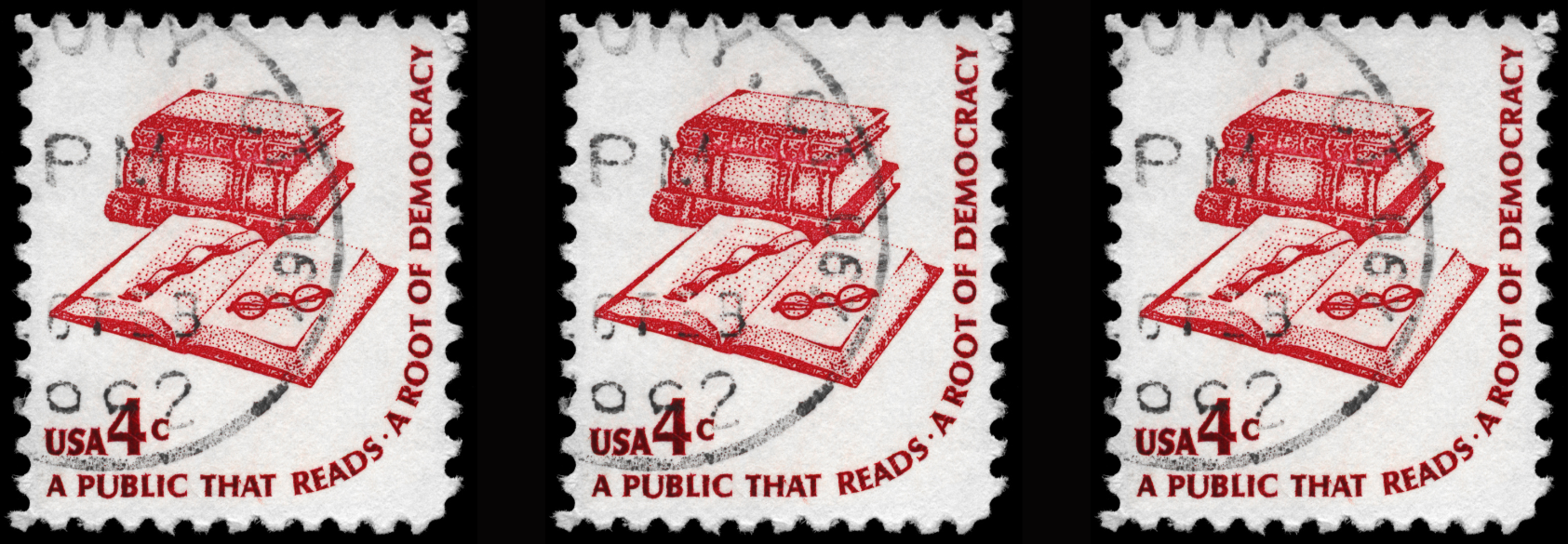
1960s U.S. postage stamp reading “A Public That Reads, A Root of Democracy” featuring stacked books and an open book, 4-cent USA stamp.

“A Public That Reads Is a Root of Democracy.” A vintage U.S. postage stamp reminding us that literacy and civic engagement go hand in hand. Credit: AlexanderZam / iStock

Back to the Beginning: Early American Literature for Today’s Students

February 18, 2026

Back to the Beginning: Early American Literature for Today’s Students

Looking for fresh ways to teach Early American literature for America250? Discover diverse voices, powerful stories, and a student-led approach to celebrating 250 years of American literature.

Share

Share On Facebook
Share On Twitter
Share On Pinterest
Share On LinkedIn
Email

My elementary years were a unique experience, as I was one of the only white kiddos in the neighborhood school. Jenkins Elementary, in Newport News, Va., was one of the schools impacted by desegregation and forced busing in the late 1970s. Because I lived within half a mile of the school, I was allowed to stay in the local school, but the majority of my classmates were bused in from Hampton. I ran across this fascinating video that tells the story. Growing up in a predominantly Black school in a predominantly white neighborhood had some challenges; but for the most part, I reaped the benefits of diversity that I’m sure I otherwise would not have experienced. One of those unintended consequences was a rich cache of books about the real history of the United States—a history that was resplendent with people of color and women’s stories. (A More Perfect Union: Voices for Civil Rights in America is a great place to start if you are looking for your own resources.) The first book I ever remember reading that took my breath away was Freedom Train: The Story of Harriet Tubman. The first poetry I remember is from Phillis Wheatley Peters, and I was pretty obsessed with Washington Irving too. It is not really surprising then that my master’s thesis was on the experience of Southern and Black Women in shaping literature and arts, specifically Zora Neale Hurston and Lee Smith.

My own experiences with the literature from the Colonial and Early National Period led me to chase the themes of those years for most of my adult life: building community, unifying people, and the pursuit of the ideal life.

I share all of this to begin a series of blogs and lessons on America250 (the U.S. Semiquincentennial), with an emphasis on the literature that has touched my life, both as an English teacher, but also as a young woman navigating the end of the last century and the beginning of this one. I’m going to help my students discover literature that spans our history instead of just the few pieces they might find in an anthology. My own experiences with the literature from the Colonial and Early National Period led me to chase the themes of those years for most of my adult life: building community, unifying people, and the pursuit of the ideal life. Here are a few of my favorite figures from this era:

Harriet Tubman

You probably already know that Harriet Tubman was a conductor on the Underground Railroad, but you likely didn’t know she was also a spy for the Union Army in South Carolina. Tubman had suffered a head injury as a teen, and for the rest of her life she had seizures and vivid, spiritual dreams. She was a suffragist and also an advocate for the elderly, opening her own Harriet Tubman Home for the Aged. She was fierce, and not afraid to claim credit where it was due, saying, “[If my services] do not place woman as man’s equal, what do?” 

Benjamin Franklin

Ben Franklin was brilliant, and he was quirky; I may have a nerdy teacher crush on this rakish fellow. He’s respectable, of course, as he was the only Founding Father to sign the Declaration of Independence, the Treaty of Alliance with France, the Treaty of Paris, and the U.S. Constitution. That’s impressive, of course, but he also founded the first volunteer fire department, loved “air baths” (sitting naked in front of an open window to promote health), and he created the “Drinker’s Dictionary” which has over 200 words to describe drunkenness. He was really into chess, spoke five languages and, of course, he is the author of Poor Richard’s Almanac, which is truly delightful for any of you quote collectors out there. He coined the phrase, “Early to bed, and early to rise makes a man healthy, wealthy and wise,” as well as my favorite, “What you seem to be, be really.” I could go on. (I did, here, in “The Efficient Educator: An Ode to Ben Franklin.”)

Ona Judge

I didn’t learn about Ona Judge until I was in grad school, but this lesson plan from the National Women’s History Museum explores the synergy of some of the most incredible people of the era with a jigsaw activity. Judge was gutsy and escaped slavery from the Washingtons. Yes, those Washingtons. George Washington spent considerable time and money to recover her, but to no avail. When I first learned about her, I was struck with the self-determination and courage it must have taken to seek her freedom, and then live in exile. 
Remote video URL

Why I Haven’t Taught These Early American Voices Before

As an English teacher, I have never taught anything about these super interesting Americans and their contributions to the country and literature; and as I started to write this, I wondered why. After some thought, it occurs to me that there is simply so much to teach—too many choices and restraints, and like most teachers, I have my “favorites.” An oldie but goodie, is my Utopia project after reading The Giver. My new favorite book to teach is Long Way Down, which took me a bit to work out. You can follow my journey through these resources: Writing About Jason Reynolds’ Long Way DownTeaching Jason Reynolds’ Long Way Downand A Long Time Coming: I’m Finally Teaching Jason Reynolds’ Long Way Down. I just finished teaching it again, and I’ll be adding some other resources soon—specifically, an old-school approach with composition books. 

So, as I reflected, I decided that with the resources available to us as teachers, we should be able to let students lead the way. The project I’m proposing for my students is one of discovery. Too often, we prescribe to our students what they should be interested in; when there are so many resources, choice should definitely be offered. Here’s where I’m headed with this idea to celebrate 250 Years of Literature. (Additional resources can be found at America250: The Story of American Literature.)

This blog is part of a series on celebrating America’s 250th. Read the companion here.

America at 250: From Revolution to Republic

This collection traces the nation’s journey from colonial life and growing resistance to British rule, through the Revolutionary War, the Declaration of Independence, and the creation of a new constitutional government. Organized thematically, the resources support instruction in U.S. history, civics, and ELA while encouraging inquiry, discussion, and critical thinking.

Subscribe to Our Newsletter

Want to see more stories like this one? Subscribe to the SML e-newsletter!

Amber Chandler
  Amber Chandler is a National Board Certified middle school ELA teacher in Hamburg, New York with a Master’s Degree in Literature, as well as a School Building Leader certification. She is the 2018 Association for Middle Level Educators’ “Educator of the Year.”  Amber has enjoyed a wide variety of... See More
Advertisement

Post a comment

Log in or sign up to post a comment.