


George Washington’s Vision for American Identity Tested 250 Years Later
As political divisions deepen, George Washington’s early warnings about unity, parties, and national identity take on renewed relevance for today’s America.
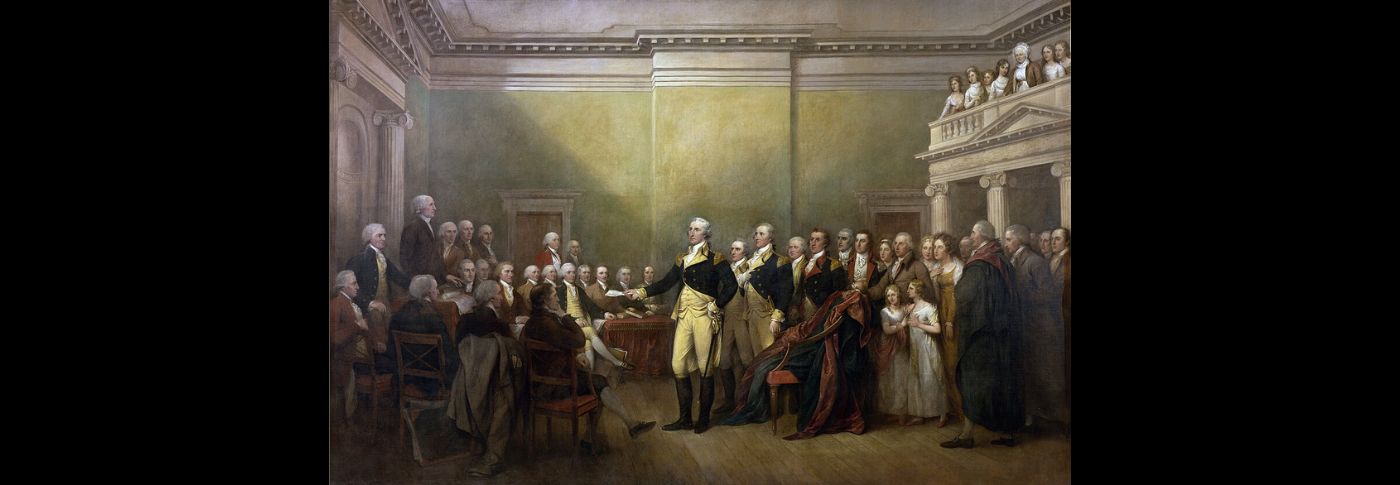
General George Washington Resigning His Commission by John Trumbull.
Share
February 2, 2026
As political divisions deepen, George Washington’s early warnings about unity, parties, and national identity take on renewed relevance for today’s America.
Share
Note: If you are short on time, watch the video and complete this See, Think, Wonder activity: What did you notice? What did the story make you think about? What would you want to learn more about?
As the country observes the 250th anniversary of the Declaration of Independence, Judy Woodruff is starting a new chapter of America at a Crossroads. She’ll explore what it means to be an American, how that idea has evolved since the nation’s founding and where we might be headed. She begins by looking at how closely our identity as Americans adheres to the template created by George Washington.
View the transcript of the story.
The Declaration of Independence begins by identifying "life, liberty and the pursuit of happiness" as unalienable rights. Why do you think Thomas Jefferson chose these principles? Do you think these unalienable rights are part of our law and governance today? Where are they most threatened?
Media literacy: Why do you think Judy Woodruff talked to ordinary citizens for this segment? How do you think they were chosen?
Want to see more stories like this one? Subscribe to the SML e-newsletter!
Republished with permission from PBS News Hour Classroom.


